Endocrine


The Endocrinology Unit offers great learning opportunities for undergraduate medical students and postgraduate trainees. This experience includes exposure to a wide range of endocrinology services, ensuring a comprehensive educational journey.

Masters of Medicine (Int Medicine)

Candidates pursuing a Master of Medicine (Internal Medicine) are required to complete a 12-week endocrinology rotation as part of their training.

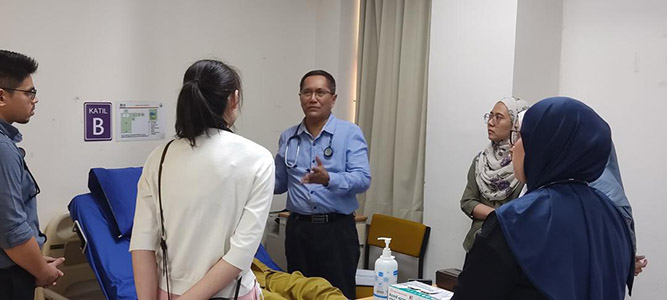
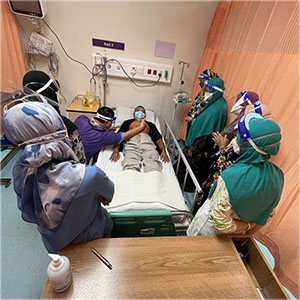
During this rotation, trainees acquire hands-on experience in managing patients with endocrine disorders, both in the general ward and the endocrinology clinic, under the guidance of seasoned professionals.
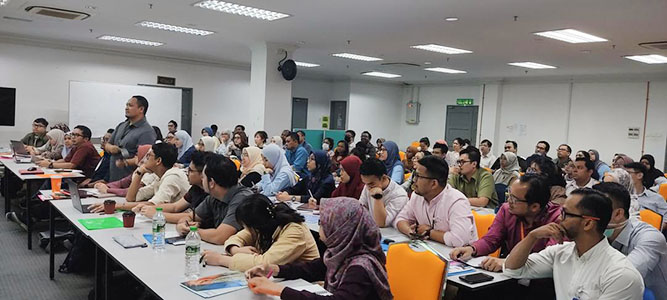
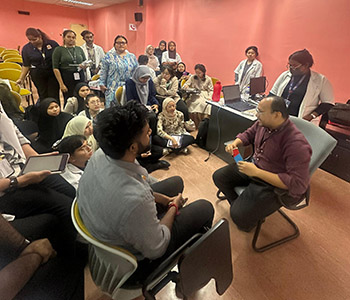
Trainees also participate in patient care across various multidisciplinary clinics, such as the neuroendocrine, bariatric, fertility, and maternal clinics. These clinics provide a broad exposure to various cardiometabolic and neuroendocrine disorders, as well as other endocrine conditions.

Throughout the year, several multidisciplinary meetings are held, involving specialties such as endocrinology, surgery, oncology, neurosurgery, radiology, and gynecology. Trainees also have the opportunity to observe and participate in various procedures, including water deprivation tests, synacthen tests, and other endocrine dynamic tests. On top of that , they may also being given the opportunity to observe subspecialty procedures like bariatric surgery, adrenal venous sampling, and inferior petrosal sinus sampling under interventional radiology.

Community Engagement

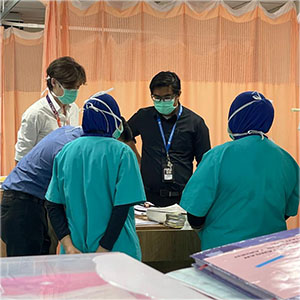
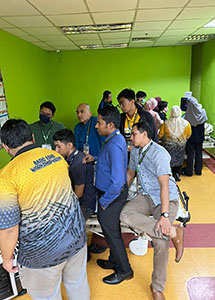
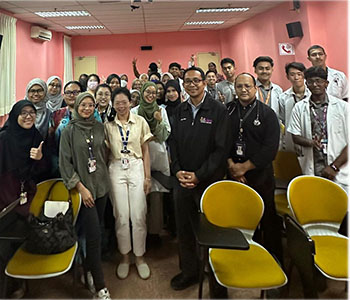
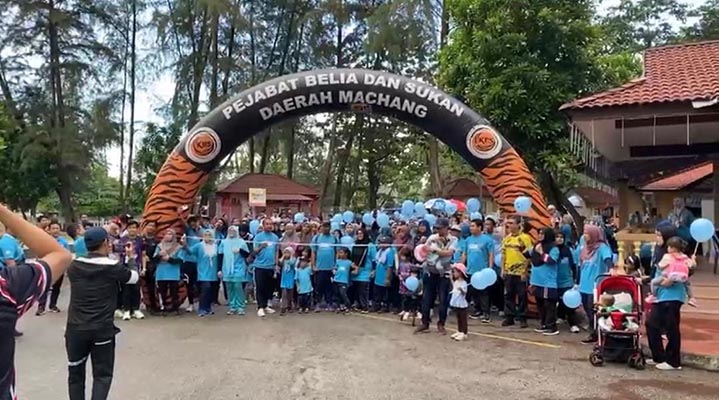
Since diabetes is a lifestyle illness, students are urged to get involved in educating the public about high-risk eating habits and inactivity. Below is World Diabetes Day 2023 which was held in Machang.
Read more …Endocrine

Cardiology


Cardiology Unit provides experiential learning for undergraduate medical student and postgraduate trainee. The student experience encompasses a diverse array of cardiology services, providing a comprehensive and thorough educational journey.

Masters of Medicine (Int Medicine)

Master of Medicine (Int Med) candidate undergo a 12-weeks rotation in cardiology as a part of the requirement.

During this period, trainees are exposed to inpatient-care concerning patients with cardiovascular diseases. Trainees are given the chance to oversee patient-care procedures in a coronary care unit (CCU) and cardiac rehabilitation ward (CRW) setup while under supervision.

  • Cardio T 1

  • Cardio WR

  • Cardio Est

Additionally, trainees assist patients at the Cardiology Clinics. Various clinics with distinct specializations exist, including the Heart Failure Clinic, Post Discharge Clinic, and General Cardiology Clinic. The latter facility gives students exposure to a wide range of cardiovascular conditions, from ischemic heart disease to hypertension, giving them a strong foundation in general cardiology.

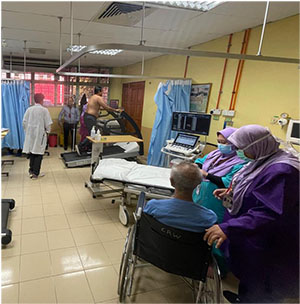
Essential skills in echocardiography and exercise stress testing are taught to students, including how to conduct and interpret simple echo investigations. This is essential for the prompt identification and treatment of cardiovascular diseases, particularly in cases of emergency such as infective endocarditis, ventricular septal defect, and cardiac tamponade.

The purpose of the written and practical exams that students take near the end of each clinical posting is to evaluate their clinical knowledge, skills, and decision-making abilities in accordance with recent best practices and recommendations.

Students are also exposed to cutting edge interventional cardiology at the same time..

Fellowship in Cardiology

For individuals seeking even more specialization in cardiology, the Cardiology Unit also provides fellowhsip in Cardiology Subspecialty Training Program. Complete instruction in invasive and non-invasive cardiology methods is provided, guaranteeing that graduates of the program will be well-rounded cardiologists with up to date knowledge.

  • Cardio 4 ICL

  • Eps T


During their training, trainees are exposed to invasive cardiology procedures, such as:

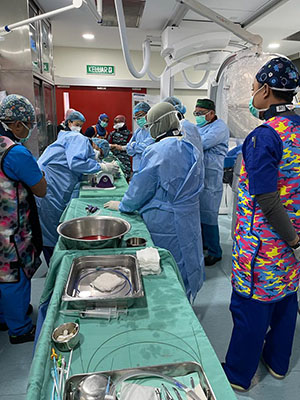
  • Cardiac catheterization: They gain practical experience in diagnostic and interventional catheterization techniques, such as balloon angioplasty, stent insertion, and coronary angiography.
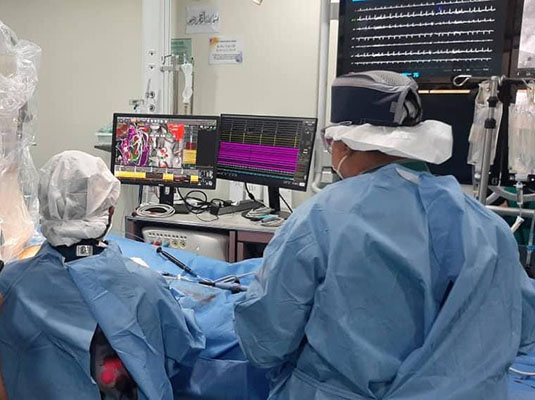
  • Electrophysiology: Instruction in sophisticated arrhythmia management techniques, such as ablation operations.
  • Implantation of pacemakers and implanted cardioverter-defibrillators (ICDs): extensive exposure to device implantation and post-implant care.

Non-Invasive Cardiology Training includes:

  • Basic and Advanced Echocardiography: Builds upon the foundational echo abilities through instruction in 3D imaging, stress echocardiography, and transesophageal echocardiography (TEE).
  • Holter Monitoring and Stress Testing.
  • Cardiac MRI and CT.
Seminars and Workshops

Periodically, seminars and workshops have been held to disseminate knowledge to a broader audience.

  • Echozero 2 Hero

  • Echowokshop 2

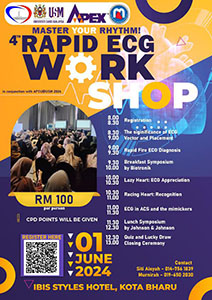
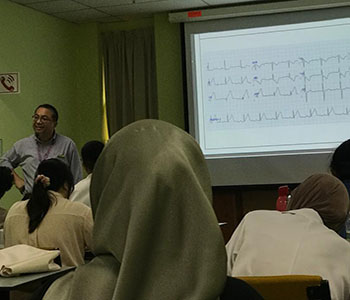
  • Rapid ECG

Read more …Cardiology

MMed Int Med (USM)


Master of Medicine in Internal Medicine (MMed.Int.Med) programme of Universiti Sains Malaysia is a specialist training programme for a qualified medical practitioner to be an internal medicine physician. The programme was first established in 1988 with 4 candidates and over the years it has produced many Internal Medicine specialists in the country. It is a conjoint programme with 6 other universities namely Universiti Malaya, Universiti Kebangsaan Malaysia, Universiti Putra Malaysia, Universiti Teknologi Mara, Universiti Islam Antarabangsa and Universiti Malaysia Sarawak.

Training Requirement

In USM, the training programme is divided into three phases; PI, PII, and PIII. In PI which is year one, according to sponsors arrangement, a candidate may continue their training focus on general internal medicine in their sponsor agreed institution or with USM in a (2 + 2) years schedule framework. Such scheduling is not applicable for private or international candidate

In PII which consist of second and third year training, spanning a period of 24 months, candidate undergo a minimum of 8 subspeciality rotations majority of which is of 12 weeks duration with some over 6 weeks. This is further illustrated in the subspeciality menu item. Not all subspeciality rotations are available in USM. Some has to be outsourced to neighbouring institution.

  • Long Case 'Exam'

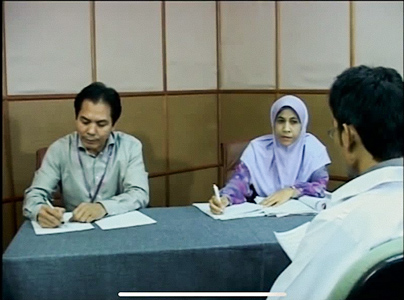
    Candidate going through a mock exam.
  • Serious but 'Santai'

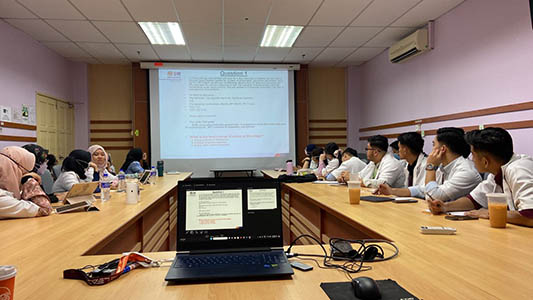
    Lecturers vetting theory exam questions.
  • Short Case Training

    A short case session with Prof Zurkanai

In Phase III which is the final year of training, candidate are given responsibility to function as clinical registrar, preparing them to be future internal medicine consultant. Research and development play a major role in the field of medicine, and we want our students to have these kinds of skills. The program requires candidates to write a research dissertation, which they must defend during an exit viva.

Exam Requirement

Prior to entrance into the program, candidates needs to qualify through MEDEX Internal Medicine exam.

In addition to ongoing assessments, candidates must take two tests during the program. The first is the Phase II Professional Examination, which will include both a clinical and theoretical component. as well as the exit viva for the research dissertation that was turned in.

To receive the postgraduate scroll, one must successfully complete both the training and exam requirements.

Post-viva photo

That sigh of relief! It's over! Candidates with viva examiners.

Read more …MMed Int Med (USM)

GMT 505


Phase II Year 5's internal medicine II (GMT 505) is a six-week course. The course's objective is to get students ready to practice medicine. The 6 weeks of Internal Medicine posting include 2 weeks of SHOTS (Shadow House Officer Training Schedule). Clinical ethical issues in patient care is emphasized.

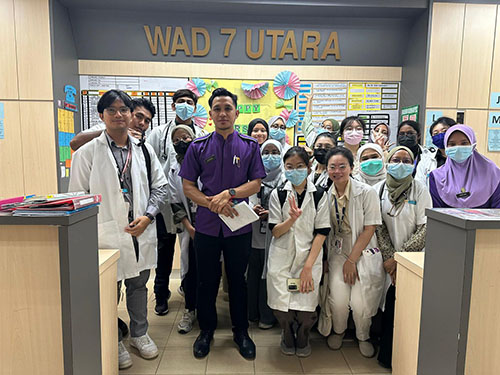
In order to gain hands-on experience with the clerking process, procedures, and patient progress, students must participate in ward rounds and night-calls. Joining ward rounds with the supervising consultants and their team is an invaluable opportunity to enhance one's proficiency in patient care.

Lecturers will oversee the designated mentee in the areas of clinical decision-making, documentation, and patient assessment. The students will be assessed both over the course of the semester and at the end through final exams.

Students' understanding, ability to communicate, clinical proficiency, and professional conduct will be evaluated. The forms of continuous assessment will include; Writing a case report, assessment based on a logbook and evaluation provided by the supervisor.

The assessment

Students will be briefed by the respective course coordinator at the beginning of each posting

For students and faculty, kindly visit the E-learning portal for more details.

Read more …GMT 505

GMT 305


Internal medicine I (GMT 305) in Phase II Year 3, is a 9-week course. The aim of the course is to enable the students to understand common problems in internal medicine. Clinical ethical issues in patient care will be instilled. Teaching activities comprise of both theoretical and clinical learning which will be delivered via seminars, ward rounds, problem-solving learning, clinic sessions and case presentation. Students are expected to clerk and follow the patients’ progress under their care.

In order to gain hands-on experience with the clerking process, procedures, and patient progress, students must participate in ward rounds and night-calls. Joining ward rounds with the supervising consultants and their team is an invaluable opportunity to enhance one's proficiency in patient care.

Lecturers will supervise each student and track their progress using clinical attendance, logbook, and supervisor’s report. Continuous assessment and end of course examinations will be used to evaluate the students.

  • Ecgmd MD 3

  • Group MD 3

  • Smallgroupmd MD 3

Students' understanding, ability to communicate, clinical proficiency, and professional conduct will be evaluated. The forms of continuous assessment will include; Writing a case report, assessment based on a logbook and evaluation provided by the supervisor.

The assessment during the end posting examinations will consist of both theoretical and clinical components.

The theory component consists of:

  1.  Multiple True False Question (MTF)
  2.  Single Best Answer (SBA)
  3.  Scenario Based Question (SBQ)

The clinical component consists of:

  1.  Long Case Assessment
  2.  Objective Structured Clinical Examination (OSCE)

Students will be briefed by the respective course coordinator at the beginning of each posting

For students and faculty, kindly visit the E-learning portal for more details.

Read more …GMT 305