MyNrp
Welcome to the
MyNRP
Learning Hub
Latest NRP Updates
Upcoming Courses
Quick Access
Welcome Message
Empowering Healthcare Professionals Through Excellence in Neonatal Resuscitation
Every newborn deserves the best possible start in life. The USM MyNRP Learning Hub is platform for evidence-based neonatal resuscitation education, bringing together the latest NRP recommendations, interactive learning resources, simulation training, and practical clinical guidance.
Whether you are a medical officer, paediatrician, obstetrician, family physician, emergency physician, nurse, or student, we are committed to supporting your journey towards safer neonatal care and better outcomes for every baby.
Learn. Practise. Save Lives.
Let's Explore Us
-
Latest NRP Updates
Stay Current. Stay Prepared.
Keep up with the latest recommendations from the Neonatal Resuscitation Program (NRP).
This section highlights important guideline updates, evidence-based practices, clinical pearls, and changes introduced in the latest NRP edition, ensuring your knowledge remains current and your clinical practice reflects the best available evidence.
Latest Topics
- NRP 9th Edition Highlights
- Guideline Updates
- Clinical Practice Changes
- Evidence-Based Recommendations
-
About MyNRP
The Malaysian Neonatal Resuscitation Programme (MyNRP) is Malaysia's national neonatal resuscitation training programme, coordinated by the Perinatal Society of Malaysia (PSM). It aims to equip healthcare professionals with the knowledge, technical skills, and teamwork required to provide effective resuscitation for newborn infants immediately after birth.
The programme follows internationally recognised neonatal resuscitation principles and incorporates the latest evidence-based recommendations from the American Academy of Pediatrics (AAP) and the American Heart Association (AHA), while being adapted to meet the needs of healthcare providers in Malaysia.
The USM MyNRP Learning Hub complements the national programme by providing continuous learning resources, educational updates, simulation materials, and practical guidance to support healthcare professionals beyond the classroom.
-
What is MyNRP?
The Malaysian Neonatal Resuscitation Programme (MyNRP) is a structured educational programme designed to train healthcare professionals in the assessment, resuscitation, and stabilization of newborn infants during the critical first minutes after birth.
The programme combines self-directed learning, knowledge assessment, hands-on skills training, integrated clinical scenarios, simulation-based learning, and structured debriefing to ensure participants are competent in both technical and non-technical skills.
MyNRP promotes a standardised approach to neonatal resuscitation across Malaysia, ensuring that newborns receive safe, effective, and evidence-based care regardless of where they are born.
-
Why Neonatal?
Birth represents one of the most critical physiological transitions in human life. While most newborns establish breathing spontaneously, some require immediate intervention to initiate effective respiration and support cardiovascular adaptation.
Timely neonatal resuscitation can significantly reduce neonatal mortality and morbidity by ensuring that appropriate interventions are delivered during the first "Golden Minute" after birth.
The primary goal of MyNRP is to ensure that at least one healthcare provider skilled in neonatal resuscitation is present at every delivery, with additional trained personnel readily available whenever advanced resuscitation is required.
Continuous education, regular simulation training, and teamwork are essential to maintaining these lifesaving skills and improving outcomes for newborns throughout Malaysia.
-
History of MyNRP
History of MyNRP in Malaysia
Prior to 1996, Malaysia did not have a national neonatal resuscitation training programme. At that time, perinatal asphyxia was one of the leading causes of perinatal mortality.
Recognising the need for a structured national programme, the Perinatal Society of Malaysia (PSM), the Ministry of Health Malaysia, and the Department of Paediatrics, Universiti Kebangsaan Malaysia (UKM) jointly introduced the Malaysian Neonatal Resuscitation Programme (NRP) in September 1996.
The programme was adapted from the Neonatal Resuscitation Program developed by the American Academy of Pediatrics (AAP) and the American Heart Association (AHA). To facilitate nationwide implementation, the original training materials were translated into Bahasa Malaysia, and the first group of Malaysian instructors was trained under the guidance of Professor Ronald Bloom from the United States.
Since then, MyNRP has expanded across all Malaysian states, with regular updates following each new edition of the international NRP guidelines. Today, MyNRP is widely taught to doctors, nurses, assistant medical officers, and other healthcare professionals involved in newborn care throughout the country.
History of MyNRP at HPUSM
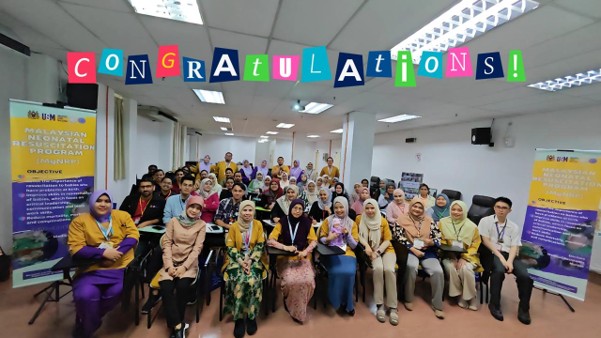
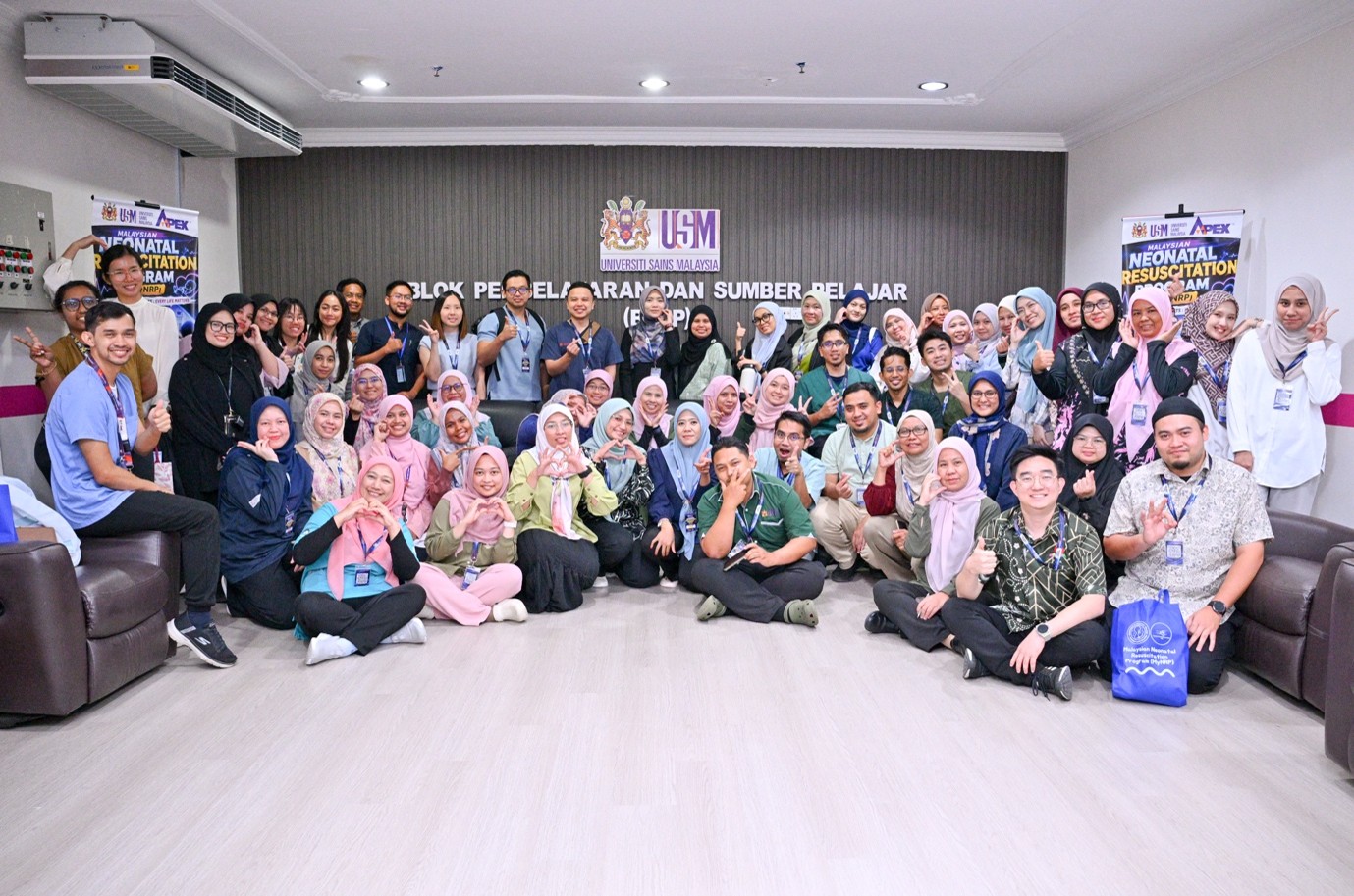
Hospital Pakar Universiti Sains Malaysia (HPUSM) has been actively involved in delivering the Malaysian Neonatal Resuscitation Programme as part of its commitment to excellence in neonatal care, education, and professional development.
The Neonatology Unit regularly organises:
- MyNRP Provider Courses
- MyNRP Provider Renewal Courses
- MyNRP Instructor Courses
- Simulation-based neonatal emergency training
The establishment of the USM MyNRP Learning Hub represents the next phase of this educational journey by creating a digital platform where healthcare professionals can access learning materials, videos, algorithms, clinical updates, and simulation resources anytime and anywhere.
Through this initiative, HPUSM aims to strengthen neonatal resuscitation education, encourage lifelong learning, and contribute to improving neonatal outcomes across Malaysia.
-
Our Faculty
The USM MyNRP Learning Hub is led by an experienced multidisciplinary faculty dedicated to neonatal education and clinical excellence.
Our faculty includes:
- Consultant Neonatologists
- Consultant Paediatricians
- Certified MyNRP Instructor Mentors
- Certified MyNRP Instructors
- Neonatal Nurses
- Medical Officers
All faculty members share a common commitment to delivering high-quality education, fostering teamwork, and ensuring that every participant develops the competence and confidence required to provide effective neonatal resuscitation.
Together, we strive to uphold the mission of MyNRP, ensuring that every newborn has access to skilled resuscitation at birth and the best possible start to life.
-
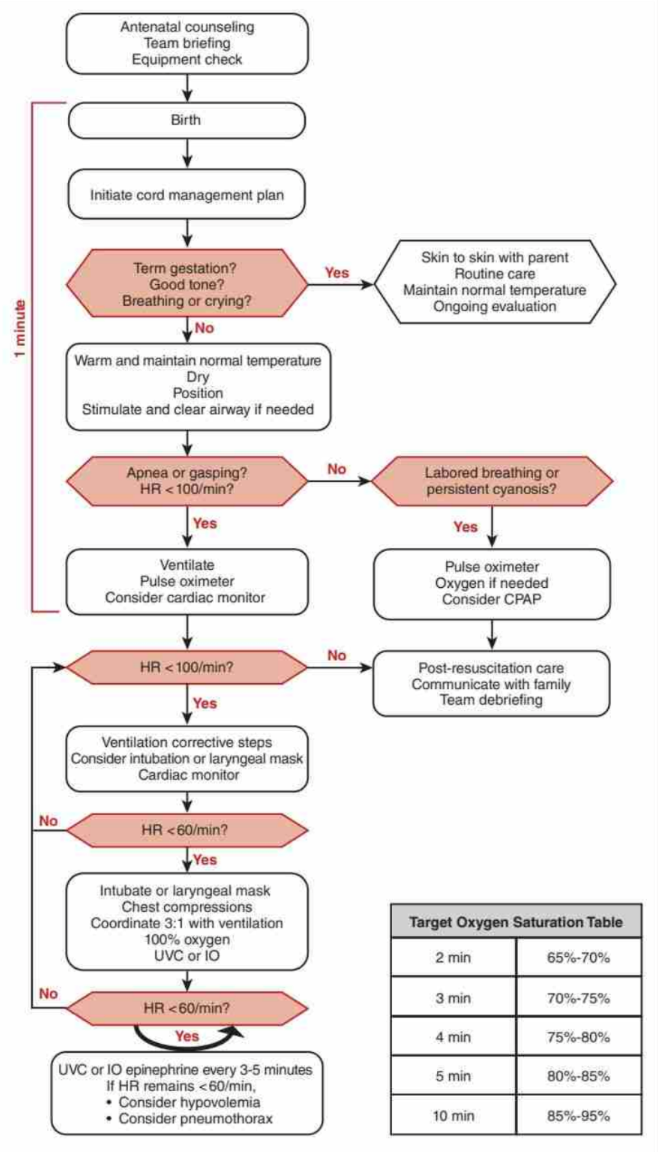
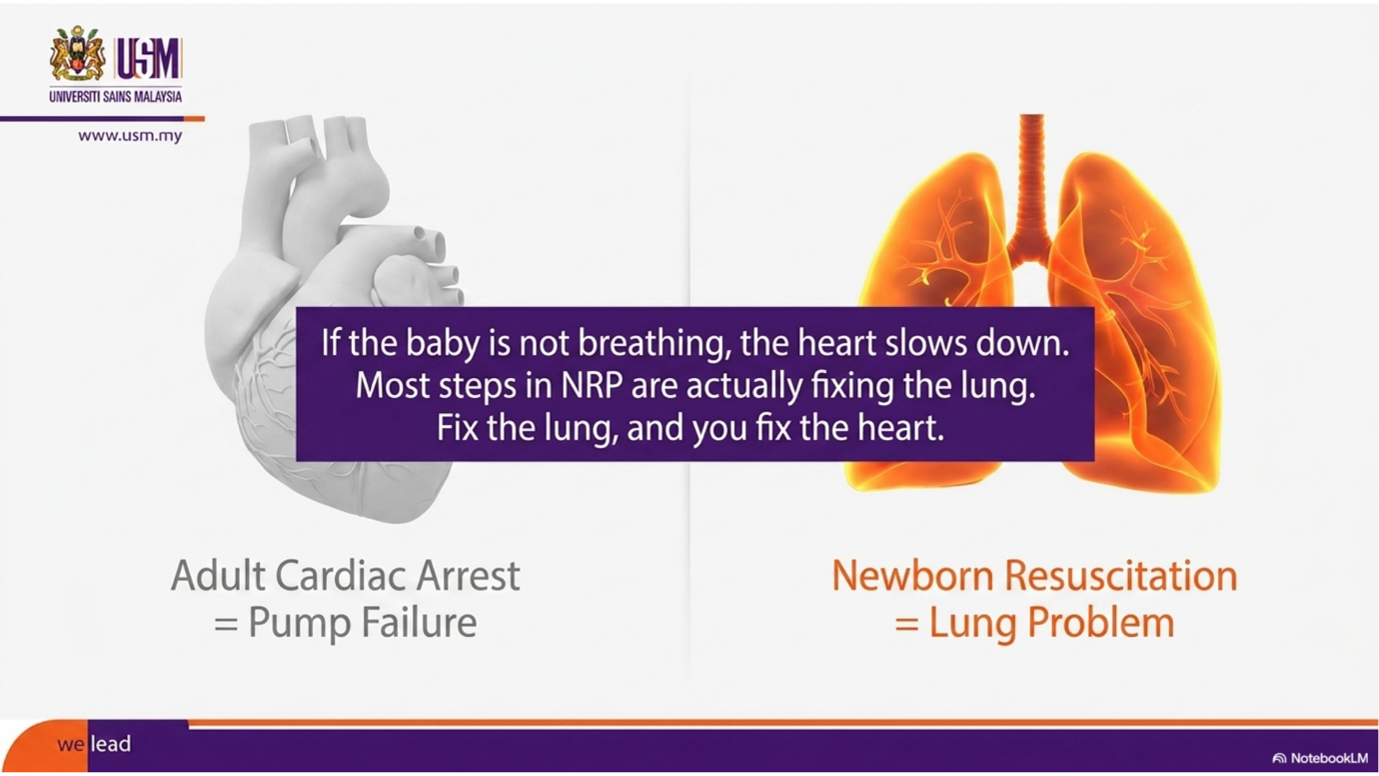
NRP 9th Edition Algorithm
-
Learning Materials
Please click: https://tinyurl.com/LearningMaterialMyNRPUSM
-
Neonatal Procedures
- UVC https://neonatal-haemodynamic.my.canva.site/uvc-insertion-depth-calculator-usm
- UAC
- ETT https://neonatal-haemodynamic.my.canva.site/neonatal-ett-size-estimator-ui
- LMA
- Chest Compression
- CPAP
- Needle thoracocentesis
- Needle aspiration
- Nasogastric tube
- IO
-
Gallery
Photos
TO BE UPDATED
Videos
-
References
- Weiner GM, Lee HC, Cooper CM, editors.Textbook of Neonatal Resuscitation (NRP).9th ed. Itasca (IL): American Academy of Pediatrics; 2025.
- American Academy of Pediatrics, American Heart Association.2025 Guidelines for Cardiopulmonary Resuscitation and Emergency Cardiovascular Care: Neonatal Resuscitation.Itasca (IL): American Academy of Pediatrics; 2025.
- American Academy of Pediatrics.Neonatal Resuscitation Program (NRP®), 9th Edition.Itasca (IL): American Academy of Pediatrics; 2025. Available from: https://www.aap.org/nrp
- Perinatal Society of Malaysia.Malaysian Neonatal Resuscitation Programme (MyNRP).Kuala Lumpur: Perinatal Society of Malaysia. Available from: https://nrp.perinatal-malaysia.org
- Perinatal Society of Malaysia.Guidelines for Malaysian Neonatal Resuscitation Program (MyNRP) Instructors.Kuala Lumpur: Perinatal Society of Malaysia.
- Boo NY, Pong KM. Neonatal resuscitation training program in Malaysia: results of the first 2 years.J Paediatr Child Health.2001;37(2):118–124.
- Boo NY. Neonatal resuscitation programme in Malaysia: an eight-year experience.Singapore Med J.2009;50(2):152–159.
- International Liaison Committee on Resuscitation (ILCOR).International Consensus on Cardiopulmonary Resuscitation and Emergency Cardiovascular Care Science With Treatment Recommendations (CoSTR): Neonatal Life Support.Brussels: ILCOR.
- Wyckoff MH, Wyllie J, Aziz K, et al.Neonatal Life Support: International Consensus on Cardiopulmonary Resuscitation and Emergency Cardiovascular Care Science With Treatment Recommendations.
- American Academy of Pediatrics.Neonatal Resuscitation Program® Learning Platform.Available from: https://www.aap.org/pedialink/neonatal-resuscitation-program
- Cloherty JP, Eichenwald EC, Hansen AR, Stark AR, editors.Cloherty and Stark's Manual of Neonatal Care.9th ed. Philadelphia: Wolters Kluwer.
- Gomella TL, Cunningham MD, Eyal FG, Bany-Mohammed F.Gomella's Neonatology: Management, Procedures, On-Call Problems, Diseases, and Drugs.8th ed. New York: McGraw-Hill Education.
- MacDonald MG, Ramasethu J, Rais-Bahrami K.Atlas of Procedures in Neonatology.6th ed. Philadelphia: Wolters Kluwer.
- Martin RJ, Fanaroff AA, Walsh MC, editors.Fanaroff and Martin's Neonatal-Perinatal Medicine: Diseases of the Fetus and Infant.12th ed. Philadelphia: Elsevier.
- American Academy of Pediatrics.Neonatal Resuscitation Program (NRP®).Available from: https://www.aap.org/nrp
- International Liaison Committee on Resuscitation (ILCOR).Neonatal Life Support Consensus Statements and Treatment Recommendations.Available from: https://costr.ilcor.org
- Perinatal Society of Malaysia.Malaysian Neonatal Resuscitation Programme (MyNRP): Official Website.Available from: https://nrp.perinatal-malaysia.org