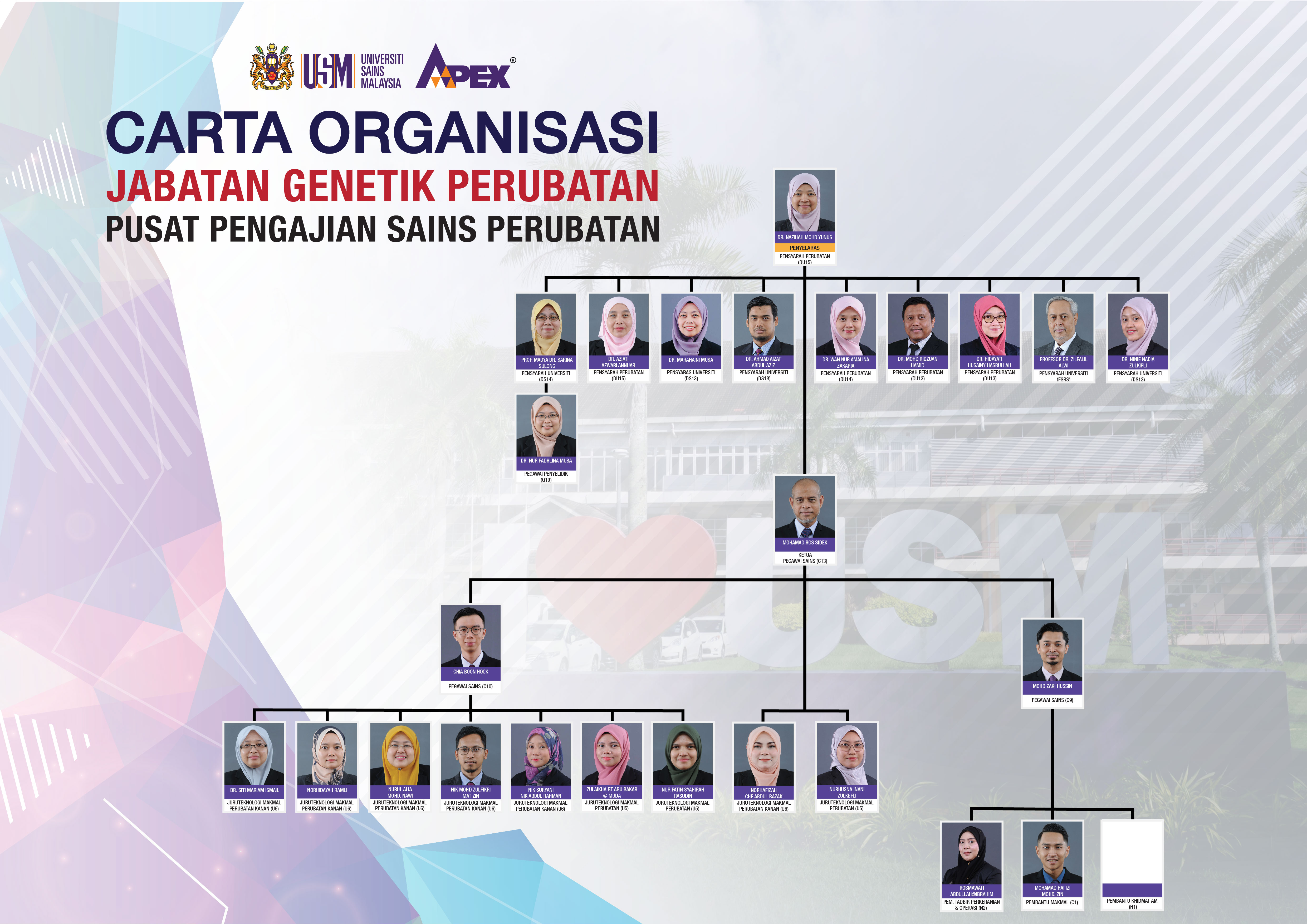
ORGANISATION CHART HGC

lorem ipsum

Newcastle University Medicine Malaysia (NUMed Malaysia)
Area of research collaboration: Microsatellite instability analysis in colorectal cancer







HOSPITAL SULTANAH NUR ZAHIRAH, KUALA TERENGGANU






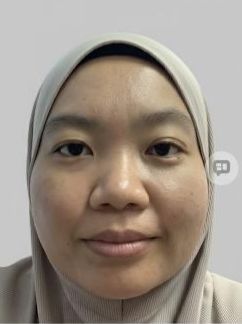


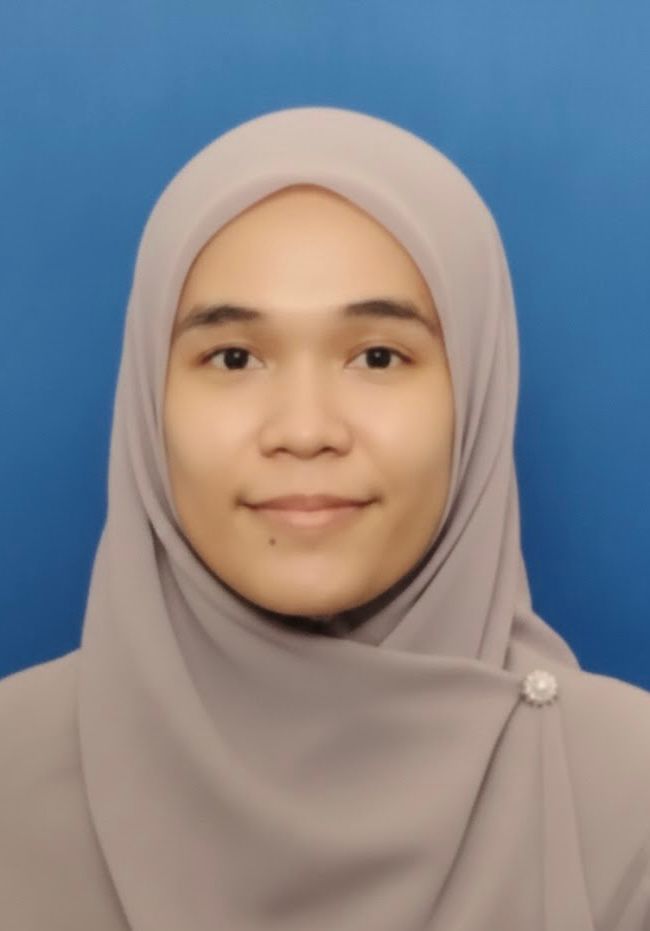


NAME: Nur Sabrina Binti Abd Rashid
NAME OF SUPERVISOR: Dr. Nazihah Mohd Yunus
TOPIC OF STUDY: Determination Of The microRNA Expression Dysregulation Profile Associated with HPV-mediated Cervical Cancer Pathogenesis
EMAIL:
LIST OF PUBLICATIONS:
1. MicroRNAs in HPV-induced Cervical Cancer Carcinogenesis and Potential Biomarkers, Malaysian Journal of Medicine and Health Sciences, 2024.
2. Application of HRM Analysis in Detection PDGFRA Exon 10 Polymorphism CML Patients with Imatinib Resistance, Malaysian Journal of Medicine and Health Sciences, 2022.
3. Association of PDGFRA gene polymorphism at exon 12, 14 and 18 with Clinical Response to Imatinib Mesylate Treatment Among Chronic Myeloid Leukemia Patients, Asian Journal of Medicine and Biomedicine, 2018
NAME: Naam Bahjat Ahmed Adeeb
NAME OF SUPERVISOR: Dr Aizati Athirah Daud
TOPIC OF STUDY: Genetic Polymorphisms of Genes Associated with Testosterone Level and Erectile Dysfunction in Male Patients on Statin Therapy
EMAIL:
LIST OF PUBLICATIONS:
1. Naam Bahjat Ahmed Adeeb, Ruzilawati Abu Bakar, Nur Aizati Athirah Daud, Hadeer Alani, Dzul Azri Mohamed Noor, Imran Ahmad, Bin Alwi Zilfalil
A review of Clinical and Pharmacogenetic Relationship Between Statin Use, Diabetes Mellitus and Erectile Dysfunction. Malaysian Journal of Medicine and Health Sciences, 2024; 20(3): 320-326
2. Nur Iffah Norazman, Mat Ghani Siti Assyuhada, Nuur Daud, Noorzalifah Mazuki, Nurul Musa, Sharifah Nany Rahayu Karmila Syed Hassan, Ayunni Bahri, Naam Adeeb, Nik Norliza nik Hassan, Nazihah Yunus, Mohamad Ros Sidek, Mohamad Zain Musa, Muhammadfahmee Talek, Muhammad Farid Zain, Numan Hayimasae, Md Salleh Yaapar, Bin Alwi Zilfalil. Ancestry single nucleotide polymorphism in Malayo-polynesian sub-groups in the Malay population. Jordan Medical Journal, 2023; 57(4):1-18. https://doi.org/10.35516/jmj.v57i4.2064

NAME: Nur Shafawati Binti Ab Rajab
NAME OF SUPERVISOR: Assoc. Prof. Dr. Sarina Sulong
TOPIC OF STUDY: Exploring The Five Potential shared SNPs In Candidate Genes with Their Molecular Pathways among Rheumatoid Arthritis And Schizophrenia Patients In Relations To Disease Severity
EMAIL:
LIST OF PUBLICATIONS:
1. Inconclusive relationship between Rheumatoid Arthritis and Schizophrenia: How to move forward? Bulletin of the Genetic Society of Malaysia, Jilid 21 No. 1&2 / ISSN 1394-5750, page 15-19. June & Dec 2015
2. A preliminary report on the association of rs900865 in rheumatoid arthritis and schizophrenia. Arch Orofac Sci 13(Suppl1): 1-30. print ISSN: 1823-8602 e-ISSN: 2231-7163 2018
3. Genetic associations study of rs12745968 and rs4822752 between rheumatoid arthritis and schizophrenia patients. AJMB, Official Journal of Faculty of Medicine, Universiti Sultan Zainal Abidin, Malaysia. 2018
NAME: Nour salibie
NAME OF SUPERVISOR: Dr. Nur Aizati Athirah Daud
TOPIC OF STUDY: Investigating the role of genetic variations of vitamin D receptor in developing peripartum depression via inflammatory biomarkers
EMAIL:

NAME: Amin Abdurrahman Bin Abdul Rashid
NAME OF SUPERVISOR: Assoc. Prof. Dr. Sarina Sulong
TOPIC OF STUDY: Elucidating the role of PAX5 gene as a telomerase activator in association with telomerase components towards myeloid leukemogenesis in the presence of 5-azacytidine.
EMAIL:

NAME: Yeoh Hao Ing
NAME OF SUPERVISOR: Dr. Ahmad Aizat Abdul Aziz
TOPIC OF STUDY: Role of Genetic Variations of ABC (ABCB1, ABCC1 and ABCG2) on Triple Negative Breast Cancer Susceptibility Risk
EMAIL:
LIST OF PUBLICATIONS:
1. Yeoh, H. I., Md Salleh, M. S., Yahya, M. M., Ankathil, R., & Abdul Aziz, A. A.* (2023). Genetic Association of ABCB1 1236 C>T Polymorphism on Malay Triple Negative Breast cancer (TNBC) Susceptibility Risk. Malaysian Journal of Biochemistry & Molecular Biology, 26(2), 39–44.
2. Yeoh, H. I., Md Salleh, M. S., Yahya, M. M., Nazri, W. M., Ankathil, R., & Aziz, A. A. A.* (2023). Association of ABCG2 Polymorphisms on Triple Negative Breast Cancer (TNBC) Susceptibility Risk. Asian Pacific Journal of Cancer Prevention, 24(1), 3891–3897. 10.31557/APJCP.2023.24.11.3891.

NAME: Sahira Syamimi binti Ahmad Zawawi
NAME OF SUPERVISOR: Dr. Marahaini Musa
TOPIC OF STUDY: Exploring novel cancer associated fibroblast marker of colorectal tumor microenvironment in differentiating the mechanisms of right-sided and left-sided colon cancer
EMAIL:
LIST OF PUBLICATIONS:
1. Zawawi, S. S. A., Salleh, E. A., & Musa, M. (2024). Spheroids and organoids derived from colorectal cancer as tools for in vitro drug screening. Exploration of Targeted Anti-tumor Therapy, 5(2), 409.https://www.ncbi.nlm.nih.gov/pmc/articles/PMC11090692/
3. Ahmad Zawawi, S. S., & Musa, M. (2022). Dynamic Co-evolution of cancer cells and cancer-associated fibrob xxxlasts: Role in right-and left-sided colon cancer progression and its clinical relevance. Biology, 11(7), 1014. https://www.mdpi.com/2079-7737/11/7/1014
2. Zawawi, S. S. A., Azram, N. A. S. M., Sulong, S., Zakaria, A. D., Lee, Y. Y., Jalil, N. A. C., & Musa, M. (2023). Identification of AOC3 and LRRC17 as Colonic Fibroblast Activation Markers and Their Potential Roles in Colorectal Cancer Progression. Asian Pacific Journal of Cancer Prevention: APJCP, 24(9), 3099. https://www.ncbi.nlm.nih.gov/pmc/articles/PMC10762737/
NAME: Elyn Amiela Binti Salleh
NAME OF SUPERVISOR: Dr. Marahaini Musa
TOPIC OF STUDY: Characterisation of Stromal Fibroblasts Derived from Left- and Right-sided Colorectal Cancer
EMAIL:
LIST OF PUBLICATIONS:
1. Elyn Amiela Salleh, Marahaini Musa, Lee Yeong Yeh, Andee Dzulkarnaen Zakaria, Nur Asyilla Che Jalil, 2023, Cancer-associated fibroblasts of colorectal cancer: Translational prospects in liquid biopsy and targeted therapy, BIOCELL
2. Ahmad Zawawi SS, Salleh EA, Musa M. Spheroids and organoids derived from colorectal cancer as tools for in vitro drug screening. Explor Target Antitumor Ther. 2024;5:409–31.

NAME: Nurhanis Fasihah Binti Muhamad
NAME OF SUPERVISOR:Dr Ahmad Aizat Abdul Aziz
TOPIC OF STUDY: Characterization of selected miRNA expression profile and its association with tumor relapse in triple negative breast cancer (TNBC) patients.
EMAIL: